Rover IDX excels at properly building SEO structures for your competitive pages.
URL Structure
Rover IDX url structure is key to your success. Simplified address urls that are crawleable forwards and backwards. The basic structure is:
<your domain> / <state> / <city> / <subdivision> / <street address>When Googlebot tries variations in this url, matching listings will still be returned. For instance:
<your domain> / <state> / <city> / <subdivision>This url will return all the active listings in that subdivision.
<your domain> / <state> / <city>This url will return all the active listings in the city.
Another great feature - you can choose to use the abbreviated or the full name for your State in the <state> component of the url. So your property urls could look like mydomain.com/ma/truro/123-main-st/ or mydomain.com/massachusetts/truro/123-main-st.
SEO Meta
Rover IDX also has deep integration with the currently key SEO plugins, ensuring correct and competitive page titles, meta descriptions, and open graph meta are built. For instance, when you paste a url into Facebook / Twitter / Instagram ..., the open graph meta will contain a series of image urls you can choose from - allowing you to choose your preferred primary image for your social post.
Sitemaps
Websites often publish multiple XML sitemap files. Typically, each sitemap groups a specific content type — for example posts, pages, property listings, or taxonomies — and these are referenced from a sitemap index file.
Today, Google primarily discovers and evaluates pages through internal linking and overall site architecture. In modern crawling systems, XML sitemaps are supplemental rather than foundational. They do not replace proper navigation, contextual links, or crawlable URLs.
However, sitemaps still serve an important function. They:
- Signal the canonical URLs you want indexed
- Surface newly published or recently updated content
- Provide discovery paths for pages that may be deeper in the site structure
- Help large or frequently updated sites improve crawl efficiency
Rover IDX automatically generates XML sitemaps for all active listings displayed on your website. These listing sitemaps are updated dynamically as inventory changes.
As with any sitemap, they should be submitted in Google Search Console to ensure Google is aware of them and can use them as an additional discovery and crawl optimization signal.
Customizable Meta
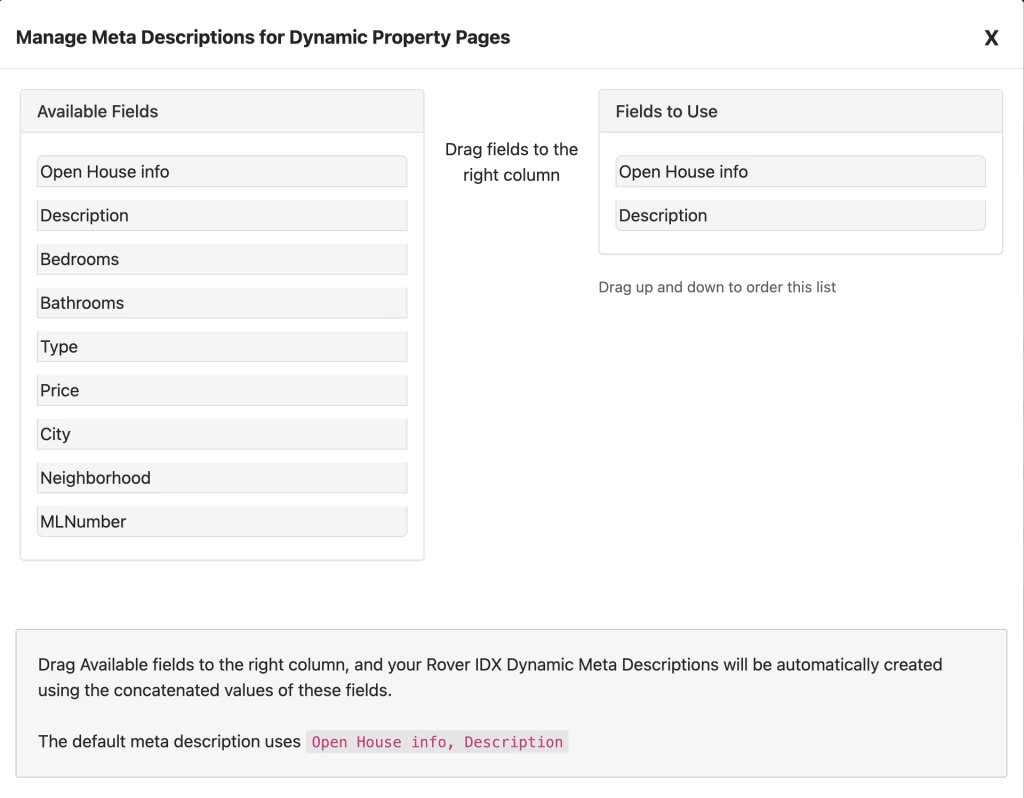
With Rover IDX, you can define the data used to build the meta description for your listings. The default format is to print the open house data for a listing, followed by it's property remarks field.